
Purification kit
AAV Magnetic Bead Purification Kit
Magnetic bead capture of viral particles — ultracentrifugation-grade purity in under an hour on the bench. Catalog number FBP2413-5,
part of the AAV Magnetic Bead Purification Kit range. Send the catalog number with your
quantity and we will confirm availability, lead time and price.
Product photo
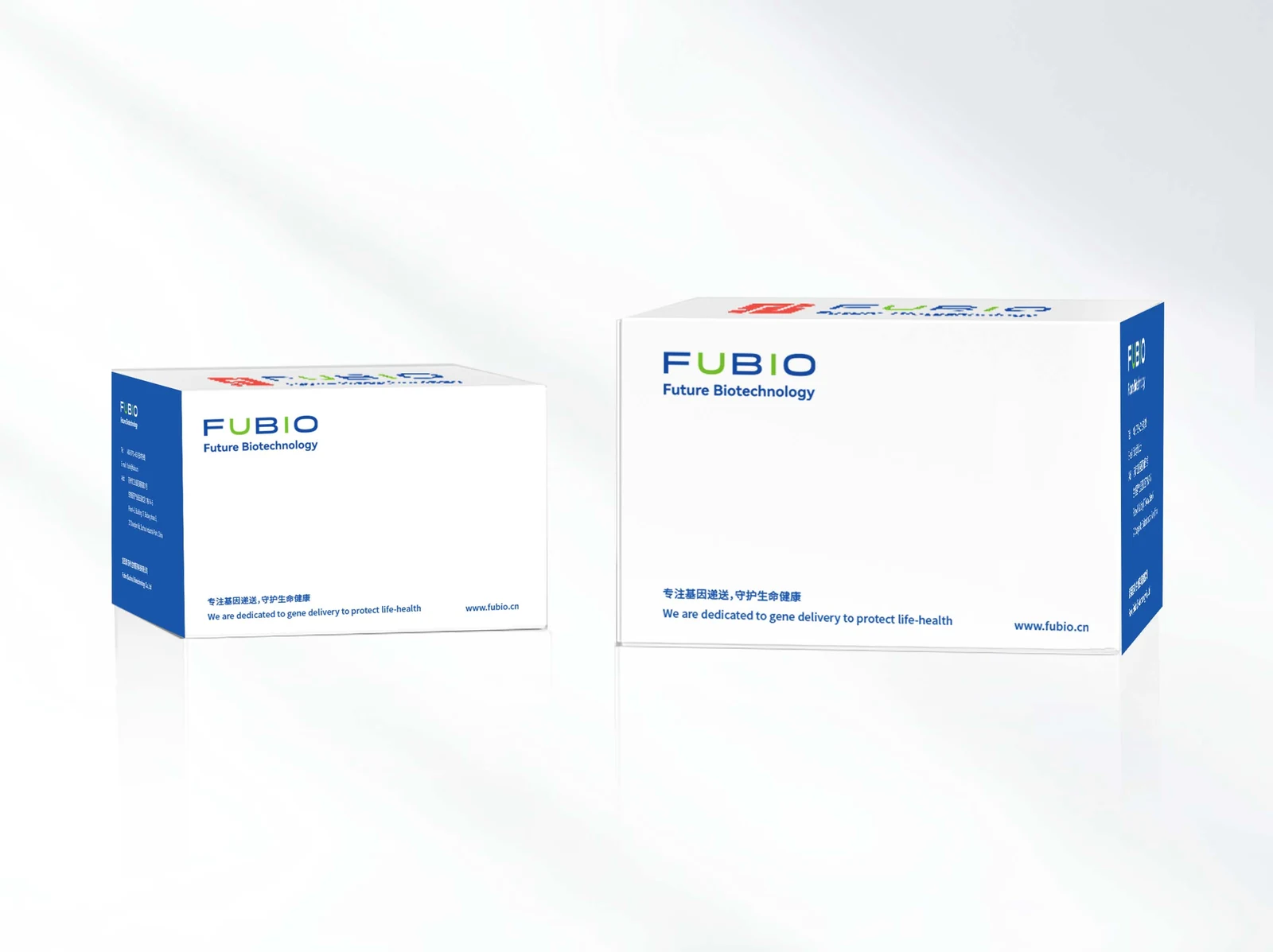
Click the photo to enlarge it.
How it works
The kit replaces density-gradient ultracentrifugation with magnetic bead capture. Functionalized beads bind intact viral particles from clarified lysate or crude vector stock under controlled pH and salt; a magnet immobilizes the bead-particle complex while the supernatant — host proteins, free nucleic acid, serum components — is washed away; a low-salt or pH-shift elution buffer releases the particles in concentrated, buffer-compatible form.
Selectivity comes from the bead surface chemistry rather than from a density difference, so the output profile differs from CsCl in a useful way: the particles are not exposed to the osmotic stress of a dense gradient, which matters for labile or titer-critical preparations. Recovery of functional particles is typically 70 to 90 percent, and the whole procedure runs in 30 to 45 minutes at the bench.

Production & quality control
- Beads are supplied as a ready-to-use suspension; buffers are supplied complete, so no reagent preparation is needed before starting.
- Each lot is functionally qualified by purifying a reference vector preparation and checking recovery and purity against the release criteria.
- The kit is compatible with clarified lysate, supernatant from transient transfection and crude vector stocks within the volume range on the data sheet.
Storage & handling
- Store the kit at 2 to 8 degrees Celsius; do not freeze the bead suspension.
- Buffers are stable at room temperature unless the label states otherwise.
- Do not use beyond the expiry date on the lot label — bead binding capacity degrades slowly past it.
Experimental protocol
-
Clarify the starting material
Spin the lysate or supernatant to remove cell debris and pass through a 0.45 micrometer filter if the volume allows. Viscosity from free DNA interferes with bead binding — a nuclease step at this point improves recovery markedly.
-
Bind
Resuspend the beads thoroughly, add them to the clarified material at the ratio stated on the sheet, and incubate with gentle rotation for 30 to 60 minutes at the recommended temperature. Keep the suspension moving — settled beads bind poorly.
-
Separate and wash
Place the tube on the magnet until the suspension clears, discard the supernatant and wash two to three times with the wash buffer. Each wash should be a complete resuspension, not a gentle swirl.
-
Elute
Add the elution buffer, resuspend and incubate briefly, then collect the eluate off the magnet. Neutralize or buffer-exchange immediately if the elution buffer differs from your storage or application buffer.
-
Titrate the output
Purified material should be titered before use — concentration changes during elution are expected and the final titer is the number that matters downstream.
Follow the protocol sheet supplied with the kit for exact volumes and incubation times; the steps below summarize the workflow. Keep the beads from drying out — resuspended beads must stay in suspension throughout.
Need the complete PDF manual with lot-specific parameters? Request the manual for FBP2413-5.
Frequently asked questions
How does this compare to ultracentrifugation?
Comparable purity for routine applications, far lower equipment barrier, and no osmotic stress on the particles. For reference-grade material for clinical-scale work, density-gradient purification remains the reference method.
What sample types work?
Clarified producer-cell lysate, transient transfection supernatant and crude vector stocks within the volume range on the data sheet. Very viscous samples need a nuclease step first.
Can I scale up?
Yes — binding is linear with bead volume across the validated range. For larger volumes, contact us with your starting material volume and target titer.